
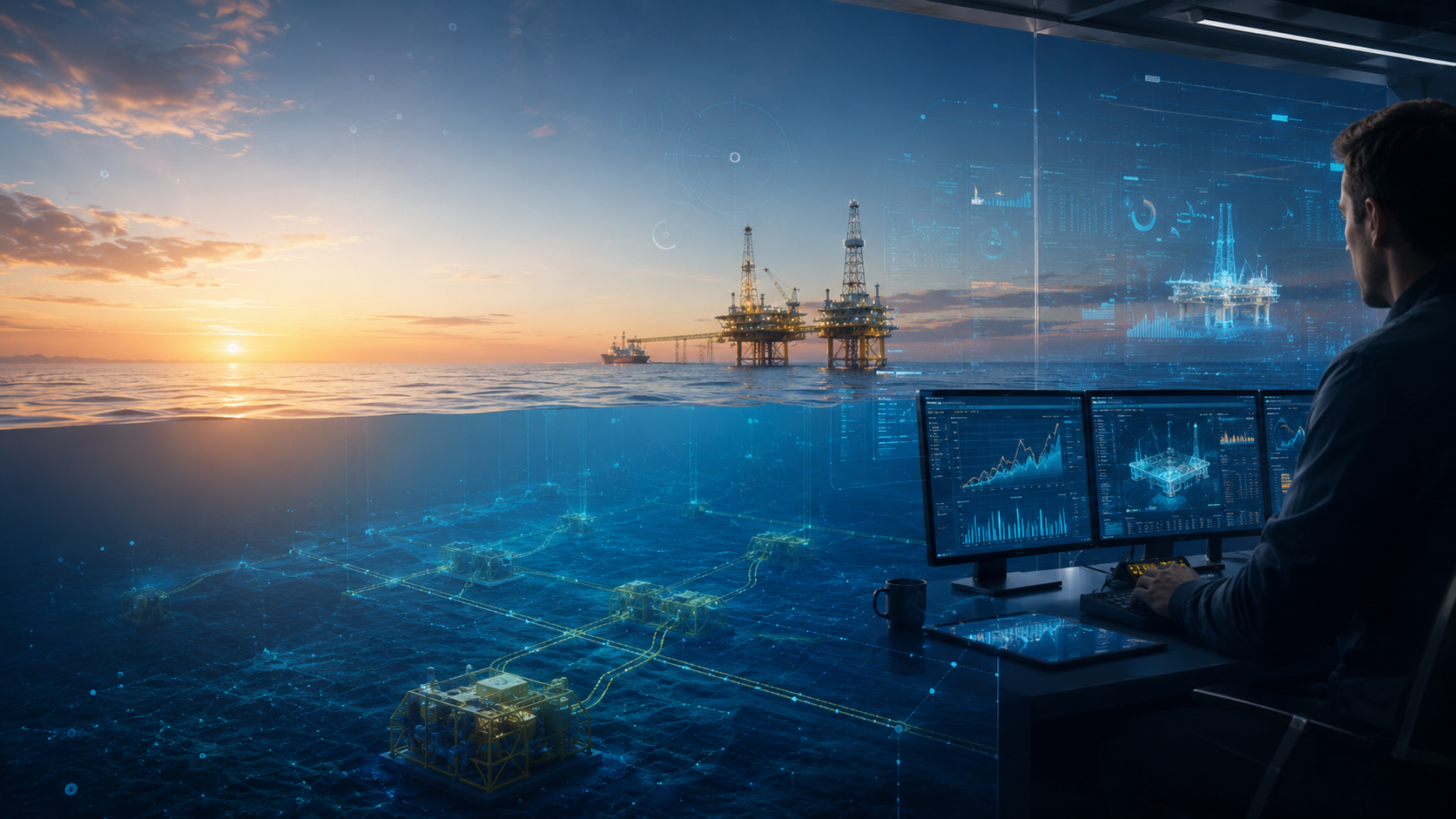
Research Laboratory Support
Research Laboratory Support (RLS) is a laboratory assistance program designed to support researchers, students, authors, and collaborators in conducting studies related to ocean engineering, offshore and subsea systems, maritime technology, and marine science.
The program provides access to laboratory facilities, technical assistance, academic guidance, experimental planning, data interpretation, and publication-oriented research support. Through this program, OPART Laboratory aims to strengthen the quality of research outputs and encourage collaboration between students, lecturers, journal authors, institutions, and maritime industry stakeholders.
RLS is intended to support research activities in areas such as hydrodynamics, wave–structure interaction, coastal processes, offshore structure response, subsea systems, marine energy, and risk-based ocean engineering studies.
Wave Flume and Wave Maker
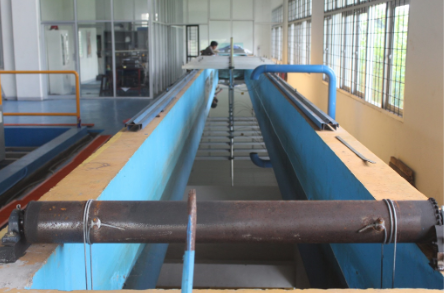
The wave flume facility is designed to generate controlled artificial waves in a laboratory channel. This facility allows researchers to simulate wave conditions under specific frequencies, amplitudes, and wave periods.
The wave maker can be used to study hydrodynamic phenomena and wave interaction with marine structures, coastal profiles, and floating or submerged models. By using a controlled laboratory environment, researchers can observe physical responses that are difficult to measure directly in the field.
Potential Research Applications
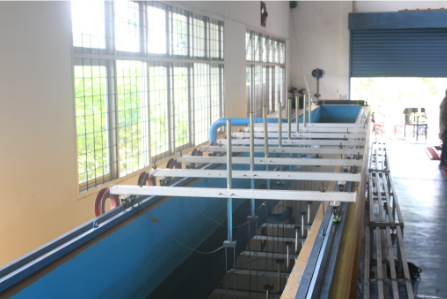
The wave flume and wave maker can support research on:
- wave propagation and transformation;
- hydrodynamic forces on marine structures;
- drag, lift, thrust, and resistance characteristics;
- wave interaction with floating and fixed structures;
- sediment transport, erosion, and coastal morphology;
- wave effects on subsea and nearshore installations;
- small-scale testing of marine renewable energy concepts;
- experimental validation for numerical and computational models.
Wave Basin Facility
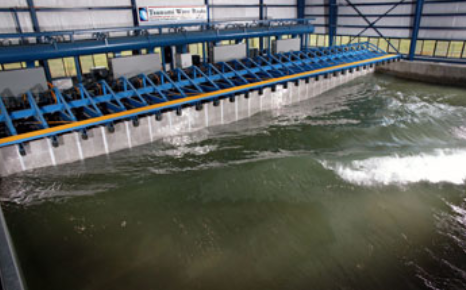
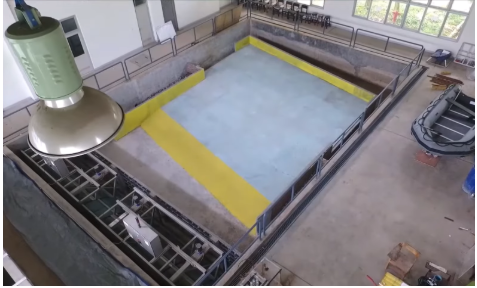
The wave basin facility is intended for wider experimental studies involving artificial wave generation in a controlled pool environment. Compared with a flume, a basin allows broader investigation of wave direction, wave spreading, and multidirectional wave–structure interaction.
This facility can be used to test scaled models of offshore structures, floating systems, coastal structures, marine energy devices, and other ocean engineering prototypes.
Research Scope
The wave basin can support studies related to:
- offshore platform model testing;
- floating structure response;
- wave impact on coastal and marine infrastructure;
- ship and floating body motion response;
- mooring and station-keeping behavior;
- wave energy converter concepts;
- extreme wave simulation, including tsunami-like waves, solitary waves, and rogue-wave scenarios;
- validation of numerical simulation and digital twin models.